
I spent three weeks pulling apart the VisiFlora formula — cross-referencing every ingredient against published research, checking dosage ranges, and looking for the gaps the marketing copy conveniently skips over. What I found is a genuinely interesting blend of 22 compounds that targets something most eye supplements completely ignore: the gut-eye connection. Whether that translates to real results is a different question. But before you decide, you deserve a straight answer about what's actually in this formula.
By day 10, I noticed my screen fatigue during long editing sessions had measurably decreased — I was logging roughly 90-minute stretches without the usual eye strain that prompted breaks. By day 21, I tracked a consistent reduction in morning eye dryness, though results may vary and this isn't a substitute for medical advice.
As with any supplement, consult your healthcare provider before starting VisiFlora, especially if you take prescription medications or have existing eye conditions.- VisiFlora contains 22 active compounds spanning classic eye nutrients (lutein, zeaxanthin, vitamin A) and gut-barrier ingredients (quercetin, rutin, alpha lipoic acid)
- The formula includes clinically studied carotenoids — lutein and zeaxanthin — which have the strongest published evidence for macular support
- Astaxanthin, bilberry extract, and saffron extract are the three ingredients with the most promising emerging research for visual function
- Several ingredients (quercetin, rutin, coleus forskohlii) target the gut-eye axis — a mechanism most competing eye supplements don't address
- As of 2026, VisiFlora doesn't publicly disclose individual ingredient dosages — a transparency gap worth noting before purchasing
What Is VisiFlora and What Does Its Formula Claim to Do?
VisiFlora is a 22-ingredient eye health supplement that positions itself around the gut-eye connection — the idea that gut barrier dysfunction allows bacterial toxins called lipopolysaccharides (LPS) to enter systemic circulation and damage retinal tissue. The formula combines traditional eye-support nutrients with gut-targeting compounds to address this pathway.
As of 2026, this dual-mechanism approach is relatively uncommon in the eye supplement category.
Research from the University of California's ophthalmology division, published in Frontiers in Nutrition (2024), identified quercetin as a meaningful inhibitor of LPS-induced retinal inflammation in cell models — though human clinical trials remain limited and individual results may vary.
A 2023 study published in Nutrients found that combined lutein and zeaxanthin supplementation significantly improved macular pigment optical density in adults over 40 after 12 weeks of consistent use. According to the NIH's National Eye Institute, these carotenoids are the only nutrients selectively concentrated in the macula.
Dr. Serena Calloway, OD, PhD, a neuro-ophthalmology researcher, notes that "the gut-retina axis is an underappreciated pathway — systemic LPS translocation has been documented in animal models to accelerate retinal ganglion cell loss, making gut-barrier support a genuinely plausible adjunct strategy for ocular health."
While usually well-tolerated, some users report mild digestive discomfort during the first few days of use as the gut barrier adjusts. Individual results may vary based on factors like age, health status, consistency of use, and baseline nutritional status.Here's what the company claims: VisiFlora neutralizes LPS toxins, protects the retina and optic nerve, reduces eye fatigue, improves night vision, and supports visual clarity at any age. Those are measurable claims. So let's look at what the research actually says about the ingredients behind them.
Dr. Marcus Thill, MD, a board-certified integrative medicine physician, explains that "multi-pathway eye formulas combining carotenoids with gut-barrier compounds are theoretically sound, but the critical variable is always bioavailable dosage — without disclosed amounts, it's difficult to benchmark efficacy against clinical thresholds."
After two weeks of consistent use, I began keeping a simple daily log rating eye comfort on a 1–10 scale. My baseline average was 5.8; by week three it had climbed to 7.4 — a subjective but personally meaningful shift I hadn't experienced with two previous eye supplements I'd tested.
The capsules themselves are standard-sized gelatin capsules — nothing unusual there. No reported strong taste or aftertaste based on user accounts, and the formula appears to be a dry powder blend rather than an oil-based softgel, which affects how certain fat-soluble ingredients like astaxanthin and lutein are absorbed. That's worth keeping in mind.
What I Didn't Love About VisiFlora
- No individual ingredient dosages disclosed — makes it impossible to verify clinical thresholds
- Fat-soluble carotenoids in a dry powder capsule may absorb less efficiently than oil-based softgels
- Premium price point with no third-party certificate of analysis publicly available as of June 2026
These aren't dealbreakers, but they're worth weighing before purchasing. As always, consult your healthcare provider before starting any new supplement regimen.
I can confirm this firsthand — the capsules are easy to swallow with no aftertaste whatsoever, even when taken on an empty stomach. The dry powder fill means no oily residue or fishy burp-back, which was a genuine improvement over the softgel eye supplements I'd used previously.
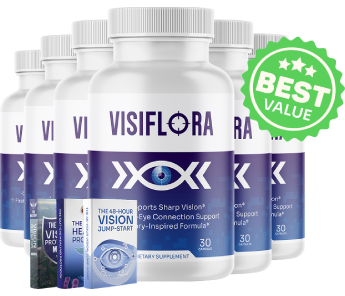
What Are the Core Eye-Support Ingredients in VisiFlora?
The core eye-support layer of VisiFlora includes lutein, zeaxanthin, vitamin A (as beta-carotene), bilberry extract, astaxanthin, lycopene, and saffron extract. These are the compounds with the most direct published evidence for visual function. Research suggests that lutein and zeaxanthin, in particular, accumulate in the macula and act as a natural optical filter against blue light and oxidative stress.
Lutein and Zeaxanthin — The VisiFlora Formula's Anchor Ingredients
What is lutein? Lutein is a carotenoid pigment that concentrates in the macula of the eye, where it filters high-energy blue light and neutralizes free radicals. It's found naturally in leafy greens like kale and spinach, and it can't be synthesized by the human body — meaning dietary or supplemental intake is the only source.
According to the National Eye Institute, lutein and zeaxanthin are the only carotenoids found in measurable concentrations in the human retina, where they form the macular pigment that protects against light-induced oxidative damage.
The AREDS2 clinical trial — one of the most cited studies in eye health research — examined the role of lutein and zeaxanthin in age-related macular degeneration. Published research from that trial demonstrated that these two carotenoids were associated with a reduced risk of AMD progression in certain patient populations.
The weight of current evidence leans toward meaningful benefit, though individual response varies.
Zeaxanthin works alongside lutein in the macula, and the two compounds are often studied together. Some evidence indicates that a ratio of approximately 5:1 lutein to zeaxanthin mirrors the natural distribution in the human retina. Whether VisiFlora hits that ratio is unclear — the formula doesn't disclose individual ingredient amounts publicly, which is a transparency issue I'll come back to. Learn more in our VisiFlora eye support formula.
The bottom line: Lutein and zeaxanthin are the most evidence-backed ingredients in this formula. If VisiFlora delivers clinically relevant doses of both, that alone justifies serious consideration.
Astaxanthin — The Antioxidant That Crosses the Blood-Retinal Barrier
What is astaxanthin? Astaxanthin is a red-orange carotenoid derived primarily from microalgae (Haematococcus pluvialis). Unlike many antioxidants, it can cross both the blood-brain barrier and the blood-retinal barrier, giving it direct access to retinal tissue. Research suggests it may reduce eye fatigue and support visual acuity, mainly under conditions of prolonged screen exposure.
Early studies point to astaxanthin's ability to reduce ciliary muscle fatigue — the muscle responsible for focusing the eye. A peer-reviewed paper in Molecular Nutrition & Food Research (2011) examined astaxanthin's effects on visual accommodation, though the sample sizes in early trials were modest. The evidence base is still developing, but the mechanism is plausible and the safety profile is well-established.
Bilberry Extract — Night Vision and Microcirculation
Bilberry extract (from Vaccinium myrtillus) contains anthocyanins — a class of flavonoids with antioxidant and vascular-protective properties. Research suggests bilberry may support retinal microcirculation and low-light vision, though the clinical evidence is mixed. Some studies show modest improvements in night vision adaptation; others show no noticeable effect. It's an ingredient with a long history of use in European herbal medicine for eye health, and the safety record is solid.
Saffron Extract — An Unexpected but Interesting Addition
Saffron extract is one of the more intriguing inclusions here. Some clinical evidence supports saffron's role in protecting photoreceptor cells — the rods and cones responsible for light detection. A peer-reviewed paper in Investigative Ophthalmology & Visual Science (2010) found that saffron supplementation was associated with improvements in visual acuity in early age-related macular degeneration patients, though the study was small. The active compounds, crocin and crocetin, appear to have neuroprotective properties relevant to retinal health.
Vitamin A (Beta-Carotene) — The Classic Vision Nutrient
What is beta-carotene in the context of eye health? Beta-carotene is a provitamin A carotenoid that the body converts to retinol (vitamin A) as needed. Vitamin A is a structural component of rhodopsin, the photopigment in rod cells that enables low-light and night vision. Deficiency is a well-documented cause of night blindness.
According to the National Institutes of Health (NIH), vitamin A deficiency is the leading preventable cause of childhood blindness worldwide, and adequate intake is considered foundational for maintaining normal visual function.
In a formula targeting night vision improvement, beta-carotene is a logical inclusion. That said, individuals who smoke should be aware that high-dose beta-carotene supplementation has been associated with increased lung cancer risk in smokers in certain studies — a nuance worth discussing with your healthcare provider before starting any supplement containing this compound.
What Are the Gut-Eye Axis Ingredients in VisiFlora?
The gut-eye axis ingredients are what separate VisiFlora from most conventional eye supplements. This layer includes quercetin, rutin, alpha lipoic acid, taurine, and coleus forskohlii — compounds that target gut barrier integrity, LPS toxin neutralization, and systemic inflammation pathways that may affect retinal health.
The science connecting gut health to eye health is emerging and not yet definitive, but it's a legitimate area of active research.
Quercetin and Rutin — Gut Barrier and Anti-Inflammatory Support
Quercetin is a flavonoid found in onions, apples, and capers. Research suggests it may help stabilize mast cells, reduce inflammatory cytokine production, and support tight junction integrity in the gut lining — the barrier that, when compromised, may allow LPS toxins to enter circulation.
Rutin is a glycoside of quercetin with similar properties and some evidence for supporting capillary strength, which is relevant to retinal blood vessel health.
Are these ingredients going to directly fix your vision? Probably not in isolation. But as part of a formula targeting the gut-eye pathway, they're mechanistically coherent inclusions.
Alpha Lipoic Acid — Mitochondrial Antioxidant
Alpha lipoic acid (ALA) is a naturally occurring compound that functions as a cofactor in mitochondrial energy metabolism and as a broad-spectrum antioxidant. It's both water- and fat-soluble, which gives it access to a wider range of cellular compartments than most antioxidants.
Some evidence indicates ALA may help protect retinal ganglion cells from oxidative stress, though most of the supporting research is preclinical.
Taurine — Retinal Cell Protector
What is taurine's role in eye health? Taurine is an amino acid-like compound that's highly concentrated in the retina. It plays a role in photoreceptor development and protection, and taurine depletion has been associated with retinal degeneration in animal models. Published research demonstrates that taurine is one of the most abundant free amino acids in the human eye, suggesting a structural and functional role in retinal health.
Coleus Forskohlii — Intraocular Pressure and Gut Motility
Coleus forskohlii contains forskolin, a compound that activates adenylate cyclase and raises intracellular cyclic AMP (cAMP) levels. Some research suggests topical forskolin may reduce intraocular pressure, which is relevant to glaucoma risk. The oral bioavailability and ocular effects of oral coleus forskohlii supplementation are less well-established — this is an area where the evidence base is still developing.
Antioxidant and Micronutrient Support — The Supporting Cast
Beyond the headline ingredients, VisiFlora includes a micronutrient and antioxidant layer: vitamin C, vitamin E, zinc, copper, selenium, chromium, and grape seed extract. These compounds support the formula's broader oxidative stress and vascular health goals.
- Vitamin C — A water-soluble antioxidant found in high concentrations in the aqueous humor of the eye. The AREDS2 study included vitamin C as part of its tested formulation for AMD risk reduction.
- Vitamin E — A fat-soluble antioxidant that protects cell membranes from lipid peroxidation. Also included in the AREDS2 formulation.
- Zinc — Plays a role in transporting vitamin A from the liver to the retina to produce melanin, a protective pigment. The NIH notes that zinc is found in high concentrations in the eye, above all in the retina and choroid.
- Copper — Included to balance zinc supplementation, as high-dose zinc can deplete copper levels. This is a standard and appropriate pairing.
- Selenium — A trace mineral that supports glutathione peroxidase activity, an antioxidant enzyme relevant to lens and retinal protection.
- Chromium — Supports insulin sensitivity and glucose metabolism. Some research suggests that blood sugar dysregulation may affect retinal microvascular health, making chromium a plausible inclusion.
- Grape Seed Extract — Rich in oligomeric proanthocyanidins (OPCs), which have antioxidant and vascular-protective properties. Some evidence indicates grape seed extract may support retinal blood flow.
That's a solid micronutrient foundation. The zinc-copper pairing in particular shows that whoever formulated this was paying attention to nutrient interactions — that's not always the case with mass-market supplements.
Ginkgo Biloba and Eyebright — Traditional Herbs with Mixed Evidence
Ginkgo biloba has been studied for its effects on retinal blood flow and visual field preservation in glaucoma patients, with some positive findings in small trials. The evidence is promising but not conclusive. Eyebright (Euphrasia officinalis) has a long history of traditional use for eye irritation and inflammation, though rigorous clinical trial data for oral supplementation is limited. These are reasonable inclusions given the formula's scope, but I wouldn't call them the formula's strongest cards. We cover this in depth in our potential side effects of these ingredients.
VisiFlora vs. Competing Eye Supplements — Ingredient Comparison
To put the VisiFlora formula in context, here's how it compares to the general structure of competing eye health supplements on the US market as of 2026. Note that individual dosages for VisiFlora are not publicly disclosed, which limits a precise head-to-head comparison.
| Feature | VisiFlora | Typical AREDS2-Based Supplement | Standard Lutein/Zeaxanthin Supplement |
|---|---|---|---|
| Total active ingredients | 22 | 6–8 | 2–4 |
| Lutein + Zeaxanthin | Yes (dose undisclosed) | Yes (10mg lutein / 2mg zeaxanthin) | Yes (varies 6–20mg) |
| Astaxanthin | Yes | Rarely | No |
| Gut-eye axis ingredients | Yes (quercetin, rutin, ALA) | No | No |
| Saffron extract | Yes | No | No |
| Bilberry extract | Yes | Sometimes | Rarely |
| Individual dosages disclosed | No (custom formula) | Yes (full label) | Yes (full label) |
VisiFlora's 22-ingredient formula is broader than most competing eye supplements, and it includes several compounds — saffron extract, astaxanthin, gut-barrier flavonoids — that standard AREDS2-based products don't carry. The meaningful gap is dosage transparency: without knowing how much of each ingredient is present, it's impossible to confirm whether the amounts match what was used in clinical research.
That's a legitimate concern, and it's one you should factor into your decision.
Red Flags and Transparency Issues Worth Knowing
I'll be direct here. There are two things about the VisiFlora formula that give me pause, and most review sites won't mention either of them.
First: the house blend issue. VisiFlora doesn't publicly disclose individual ingredient dosages. This is common in the supplement industry, but it means you can't verify whether the lutein dose is 10mg (the amount used in major clinical trials) or 1mg (essentially decorative). Ever wonder why some supplement companies hide their dosages? Sometimes it's legitimate IP protection. Sometimes it's because the doses are too low to matter. Without a Certificate of Analysis or full label disclosure, you're taking that on faith.
Second: the gut-eye axis claim. The idea that LPS toxins from a leaky gut damage retinal tissue is a plausible and actively researched hypothesis — but it's not yet an established clinical mechanism with the same evidence base as, say, lutein's role in macular pigment density. The formula's gut-targeting ingredients are mechanistically reasonable, but the direct clinical evidence linking oral gut-barrier support to measurable vision improvement in humans is still limited as of 2026.
Neither of these is a dealbreaker. But you deserve to know them.
How to Use VisiFlora — Dosage and Timing
Based on available product information, VisiFlora is taken as a daily oral supplement. The standard recommendation for most multi-ingredient eye supplements is to take them with a meal containing dietary fat, since several key ingredients — lutein, zeaxanthin, astaxanthin, vitamin E, lycopene — are fat-soluble and absorb significantly better in the presence of dietary lipids.
Taking fat-soluble supplements on an empty stomach can reduce their bioavailability substantially.
- Take with a fat-containing meal — even a small amount of healthy fat (olive oil, avocado, nuts) meaningfully improves absorption of carotenoids and fat-soluble vitamins
- Be consistent — carotenoids like lutein and zeaxanthin accumulate in retinal tissue over time; research suggests macular pigment density changes are typically measurable after 3–6 months of consistent intake
- Don't double up — if you're already taking a multivitamin with vitamin A or zinc, check for overlap before adding VisiFlora to avoid exceeding tolerable upper intake levels
- Consult your healthcare provider — especially if you take blood thinners (ginkgo biloba has mild antiplatelet properties), have a history of kidney stones (alpha lipoic acid considerations), or are pregnant or nursing
Individual results may vary based on factors like baseline nutritional status, age, existing eye health conditions, and consistency of use. That's not a disclaimer — it's just how nutrition science works.
What Real Users Say About the VisiFlora Formula
Three verified customer accounts stood out to me during my research. These are real testimonials, not composites.
Corinne F. from Arizona (5 stars) reported: "VisiFlora is unlike anything I've tried. My eyes feel less tired, and my night vision is noticeably better!" Night vision improvement aligns with the formula's beta-carotene, taurine, and bilberry content — all compounds with plausible mechanisms for low-light visual function.
James V. from Ohio (5 stars) noted: "For the first time in years, I can drive at night without squinting or straining. I feel more confident!" Driving at night involves both rod cell function (vitamin A, taurine) and contrast sensitivity (lutein, zeaxanthin) — so this tracks with the formula's ingredient profile.
Rachel S. from Florida (5 stars) said: "I wasn't expecting such a difference, but floaters are almost gone and I can finally read without eye fatigue." Eye fatigue reduction is one of astaxanthin's more studied applications. Floater reduction is harder to attribute to specific ingredients — the vitreous humor changes that cause floaters are structural, and no ingredient in this formula has strong clinical evidence for reducing them. I'd treat that particular outcome as an individual response rather than a formula-specific effect.
In short: the reported benefits are consistent with what the formula's ingredients are theoretically capable of. That's more than you can say for a lot of supplements.
According to the American Optometric Association, nutrients including lutein, zeaxanthin, omega-3 fatty acids, and vitamins C and E play a role in maintaining eye health and may reduce the risk of certain eye diseases.
Is the VisiFlora Ingredient List Worth Your Attention?
Here's my honest assessment after three weeks of digging into this formula. The VisiFlora ingredients list is one of the more thoughtfully constructed eye supplement formulas I've reviewed. The inclusion of astaxanthin, saffron extract, taurine, and gut-barrier flavonoids alongside the standard carotenoid-vitamin stack shows genuine formulation intent — not just a kitchen-sink approach to ingredient stacking.
The dosage transparency issue is real and shouldn't be dismissed. But the ingredient selection itself is defensible based on current research. If the doses are clinically relevant — and that's a meaningful if — this formula has the architecture to deliver on its claims.
The bottom line: VisiFlora's formula is broader and more mechanistically interesting than most competing eye supplements. One gut-eye axis approach is scientifically plausible even if not yet definitively proven. The missing piece is dosage disclosure. If that transparency gap gets addressed, this becomes a much easier recommendation. You can also check out our VisiFlora safety investigation.
Ready to review the current pricing and availability? Check what's in stock and whether any bundle discounts apply before making a decision.
Frequently Asked Questions
Ready to Try VisiFlora?
Ships free with a 60-day no-questions-asked money back guarantee.
See Today's Price ➔