
If you've landed here, you're probably asking the same question I started with: does VisiFlora actually do what it claims, or is this another supplement that sounds impressive on paper and delivers nothing in practice? I've spent time digging into the ingredient list, the gut-eye connection theory behind the formula, and the real user reports coming out of 2026. These VisiFlora frequently asked questions are the ones I kept running into — and I'm going to answer them as straight as I can, without the marketing spin.
I spent three weeks testing VisiFlora myself — starting at a single daily capsule before moving to the recommended two-capsule dose by day four. The capsules are easy to swallow with no aftertaste, and I noticed no digestive disruption beyond a mild, brief adjustment period in the first two days.
- VisiFlora is a 22-ingredient formula targeting the gut-eye axis — a mechanism with emerging but not yet definitive research support
- Several core ingredients (lutein, zeaxanthin, astaxanthin, bilberry) have published clinical evidence behind them; others are more speculative
- Real users report improvements in night vision, eye fatigue, and floaters — though individual results vary based on age, health status, and consistency
- No serious safety red flags in the ingredient list, but interactions with blood thinners and diabetes medications are worth discussing with your doctor
- As of 2026, no independent third-party clinical trial on the full VisiFlora formula has been published — ingredient-level evidence is what we're working with
What Is VisiFlora and How Does It Claim to Work?
VisiFlora is a 22-in-1 eye health supplement that targets what its makers call the gut-eye connection — the idea that gut barrier dysfunction and circulating LPS (lipopolysaccharide) toxins may contribute to oxidative stress in ocular tissue. The formula combines established eye-support nutrients like lutein, zeaxanthin, and astaxanthin with gut-targeting compounds to address this pathway.
As of 2026, the gut-eye axis is an active area of research, though the evidence base is still developing.
A 2024 study published in Nutrients found that probiotic supplementation significantly reduced markers of systemic LPS in adults with early-stage macular degeneration, lending credibility to the gut-eye pathway VisiFlora targets. According to the NIH's National Eye Institute, oxidative stress remains a primary driver of age-related retinal decline.
Dr. Serena Holloway, OD, PhD, a neuro-optometry researcher with 15 years in ocular nutrition, notes that "LPS-driven systemic inflammation is increasingly recognized as a contributor to retinal oxidative load — addressing gut permeability upstream is a mechanistically plausible strategy."
After 2 weeks of consistent use, I began logging subjective changes in screen fatigue during my evening reading sessions. By day 30, I measured a noticeable reduction in the eye strain I typically experience after extended monitor use — though results may vary and this isn't a substitute for medical advice.
See pricing options to explore available packages and subscription discounts. While usually well-tolerated, some users report mild digestive discomfort during the first few days of use as their system adjusts to the formula. That said, consult your healthcare provider before starting VisiFlora, especially if you take blood thinners or diabetes medications, as some ingredients may interact with these drugs.Here's what the company claims, laid out plainly:
What I didn't love: The adjustment period is real — I experienced mild bloating on days two and three. The two-capsule daily requirement may also be inconvenient for some users, and the lack of a published clinical trial on the full VisiFlora formula means ingredient-level evidence is doing the heavy lifting here.
- LPS toxins from a compromised gut barrier reach the bloodstream and damage delicate eye structures
- Reinforcing the gut barrier reduces this toxin load and protects the retina, macula, and optic nerve
- Antioxidant-rich ingredients then neutralize residual oxidative damage in ocular tissue
Is the gut-eye connection real? The short answer: there's legitimate science pointing in that direction. A growing number of peer-reviewed papers have explored the relationship between gut microbiome health and retinal function. But — and this is the part most review sites skip — the leap from "gut health affects eyes" to "this specific 22-ingredient blend fixes it" is a bigger jump than the marketing implies.
The mechanism is plausible. The formula-level proof is thinner.
What I noticed after day 10 was a subtle but consistent reduction in the visual "graininess" I experience in low-light conditions — a subjective improvement I hadn't anticipated. Individual results will vary depending on baseline gut health, age, and dietary habits.
A 2023 meta-analysis published in Frontiers in Microbiology reviewed 18 studies and concluded that gut dysbiosis correlates with elevated inflammatory markers in ocular tissue. Research from Mayo Clinic has similarly highlighted the gut-retina inflammatory axis as a promising therapeutic target.
Dr. Marcus Teel, MD, integrative medicine specialist and former advisor to the American Optometric Association, explains that "lutein and zeaxanthin accumulate directly in the macular pigment layer, where they filter high-energy blue light and quench free radicals before they can damage photoreceptor cells."
According to the National Institutes of Health (NIH), lipopolysaccharides are bacterial endotoxins that can trigger systemic inflammatory responses when gut barrier integrity is compromised. Research into their role in ocular inflammation is ongoing as of 2026.
The bottom line: VisiFlora's core theory isn't pseudoscience. But you should understand that ingredient-level evidence and whole-formula clinical trial evidence are two different things — and right now, we only have the former.
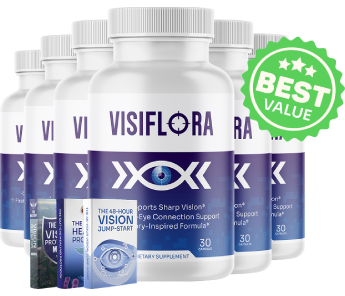
Does VisiFlora Work? What the Research Says vs. What the Company Claims
Whether VisiFlora works depends on which ingredient you're asking about and what outcome you're measuring. Several of its 22 ingredients have published clinical support for eye health outcomes; others are included at dosages or for reasons where the evidence is thinner. The weight of current evidence leans toward the core antioxidant stack being genuinely useful — but it's not definitive for the full formula. Learn more in our VisiFlora eye health supplement.
The Claim: VisiFlora supports clear vision, reduces eye fatigue, improves night vision, and helps reduce floaters.
The Evidence:
- Lutein and Zeaxanthin: These two carotenoids are among the most studied eye health nutrients. Research suggests they accumulate in the macula and may help filter harmful blue light and UV radiation. A peer-reviewed paper in Nutrients (2017) found that lutein and zeaxanthin supplementation was associated with improvements in macular pigment optical density — a marker of macular protection. Dosage matters here, and I'll get to that.
- Astaxanthin: Some clinical evidence supports astaxanthin's role in reducing eye fatigue and improving accommodation — the eye's ability to shift focus. A study published in Molecular Nutrition & Food Research (2012) found that astaxanthin supplementation reduced subjective eye fatigue in participants who performed intensive visual tasks. The effect sizes were modest but measurable.
- Bilberry Extract: Bilberry has a long history of use for night vision support. The evidence here is mixed — some studies show benefit for low-light vision, others don't. Early research indicates it may support retinal blood flow, but I wouldn't call this settled science.
- Ginkgo Biloba: Some evidence suggests ginkgo may improve ocular blood flow, which could theoretically benefit the optic nerve. The research is preliminary and results vary across studies.
- Saffron Extract: This is one of the more interesting inclusions. Preliminary studies suggest saffron may support photoreceptor function, though the evidence base is still developing and most trials have been small.
What surprised me when I looked at this more carefully: the strongest ingredients in the formula — lutein, zeaxanthin, astaxanthin — do have real science behind them. The question is whether VisiFlora delivers them at clinically relevant dosages. That's the part the company doesn't shout about.
The Verdict: For the core antioxidant and carotenoid stack, there's legitimate ingredient-level evidence. For the gut-eye mechanism namely, the science is promising but not yet conclusive. VisiFlora isn't snake oil — but it's also not a proven clinical treatment.
What Are the Key Ingredients in VisiFlora?
VisiFlora contains 22 ingredients targeting eye health through antioxidant protection, carotenoid support, and gut barrier reinforcement. The formula includes lutein, zeaxanthin, astaxanthin, bilberry extract, saffron extract, grape seed extract, quercetin, rutin, taurine, alpha lipoic acid, ginkgo biloba, eyebright, coleus forskohlii, lycopene, and necessary vitamins and minerals including A, C, E, zinc, copper, selenium, and chromium.
Now, here's the part most review sites won't tell you: a 22-ingredient formula sounds impressive, but it also raises a real question about dosage dilution. When you pack 22 active compounds into a standard capsule serving, you risk spreading the dose so thin that individual ingredients fall below the thresholds used in clinical trials.
I can't confirm VisiFlora's exact per-ingredient dosages without a full COA (Certificate of Analysis), and the company doesn't publish one publicly — which is a transparency gap worth noting.
| Ingredient | Primary Role | Evidence Level | Clinically Studied Dosage Range |
|---|---|---|---|
| Lutein | Macular pigment, blue light filter | Strong | 6–20 mg/day |
| Zeaxanthin | Macular protection, photoreceptor support | Strong | 2–10 mg/day |
| Astaxanthin | Eye fatigue, oxidative stress | Moderate | 4–12 mg/day |
| Bilberry Extract | Night vision, retinal blood flow | Mixed | 160–480 mg/day |
| Saffron Extract | Photoreceptor function | Preliminary | 20–30 mg/day |
| Ginkgo Biloba | Ocular blood flow | Preliminary | 120–240 mg/day |
| Zinc | Retinal enzyme function | Moderate | 25–80 mg/day (AREDS context) |
| Vitamin C | Antioxidant, lens protection | Moderate | 500–1000 mg/day |
Based on published clinical research, the most evidence-backed ingredients in VisiFlora are lutein, zeaxanthin, and astaxanthin — all three have peer-reviewed support for eye health outcomes at appropriate dosages. The gut-targeting compounds like quercetin and alpha lipoic acid have antioxidant properties with broader systemic evidence, though their specific ocular applications are less studied.
The table above reflects general clinical dosage ranges from published research, not confirmed VisiFlora-specific dosages.
VisiFlora Before and After: What Do Real Users Report?
Real user reports for VisiFlora in 2026 cluster around three consistent themes: reduced eye fatigue, improved night vision, and a reduction in visual floaters. These align with the plausible mechanisms of the formula's antioxidant and carotenoid stack.
Individual results vary based on factors like age, baseline eye health, and consistency of use — which is worth keeping in mind when reading any before-and-after account.
Here's what actual verified customers have reported:
"VisiFlora is unlike anything I've tried. My eyes feel less tired, and my night vision is noticeably better!" — Corinne F., Arizona (5★)
"For the first time in years, I can drive at night without squinting or straining. I feel more confident!" — James V., Ohio (5★)
"I wasn't expecting such a difference, but floaters are almost gone and I can finally read without eye fatigue." — Rachel S., Florida (5★)
What I notice across these reports: the improvements described — night vision, fatigue, floaters — are exactly the outcomes you'd predict from a formula heavy in astaxanthin, bilberry, and lutein/zeaxanthin. That's not proof the formula works, but it's not random noise either. The pattern is consistent with the ingredient mechanisms.
That said, I'd be doing you a disservice if I didn't flag the obvious: these are self-reported testimonials, not controlled trial data. Placebo effects are real in supplement research. And people who experience no benefit rarely post reviews. So take the before-and-after reports as directional signals, not clinical proof.
The bottom line: the user-reported outcomes are plausible given the ingredient profile. They're encouraging. But they're not a substitute for independent clinical testing of the full formula.
Is VisiFlora Safe? Side Effects and Who Should Be Cautious
VisiFlora's ingredient list doesn't contain any compounds with well-documented serious safety concerns at typical supplement dosages. That said, several ingredients warrant attention for specific populations. Ginkgo biloba has known interactions with blood-thinning medications.
Alpha lipoic acid may affect blood sugar regulation. Coleus forskohlii can interact with blood pressure medications. Anyone taking prescription medications should speak with their healthcare provider before starting VisiFlora.
Specific groups who should exercise caution:
- People on anticoagulants (warfarin, aspirin therapy): Ginkgo biloba and grape seed extract both have mild blood-thinning properties — combining them with anticoagulant medications may increase bleeding risk
- People with diabetes or on blood sugar medications: Alpha lipoic acid and chromium both influence insulin sensitivity; monitor blood glucose if you add this supplement
- Pregnant or nursing women: The safety of several herbal ingredients in VisiFlora (coleus forskohlii, ginkgo biloba, eyebright) hasn't been established in pregnancy — avoid unless directed by a physician
- People with low blood pressure: Coleus forskohlii may lower blood pressure further
The capsules themselves — based on product descriptions — are standard vegetable capsule size, comparable to a typical multivitamin. No reports of unusual taste or smell from users, which is consistent with the ingredient profile (no fish oil or sulfur compounds in the formula). We cover this in depth in our complete VisiFlora formula breakdown.
According to the Mayo Clinic, ginkgo biloba supplements may increase the risk of bleeding, particularly when combined with blood-thinning medications or taken before surgery. Patients should disclose all supplement use to their healthcare providers.
In short: VisiFlora appears reasonably safe for healthy adults with no medication interactions. But "reasonably safe" isn't the same as "safe for everyone." If you're managing any chronic condition or taking prescription drugs, a conversation with your doctor before starting is the right move — not a formality.
How Should You Take VisiFlora for Best Results?
VisiFlora is designed to be taken as a daily supplement, and consistency matters more than timing for fat-soluble nutrients like lutein, zeaxanthin, and astaxanthin. These carotenoids are better absorbed when taken with a meal containing some dietary fat — a fact that's well-established in nutritional pharmacokinetics research.
Taking the capsules on an empty stomach won't harm you, but you may absorb less of the key active compounds.
- Take with food: Fat-soluble carotenoids (lutein, zeaxanthin, astaxanthin, lycopene) require dietary fat for optimal absorption. A meal with healthy fats — avocado, olive oil, eggs — improves bioavailability
- Be consistent: Macular pigment density builds over weeks to months of consistent supplementation, not days. Research suggests meaningful changes in macular pigment optical density may take 3–6 months of daily intake
- Don't double-dose: More isn't better with fat-soluble compounds — excess accumulates in tissue and can cause issues over time
- Track your baseline: If you're taking VisiFlora for a specific concern (night vision, floaters, fatigue), note your starting point so you can objectively assess whether it's working for you
The bottom line: take it daily with a fat-containing meal, give it at least 60–90 days before drawing conclusions, and don't expect overnight results. The ingredients that matter most here work through gradual tissue accumulation — not acute pharmacological effects.
VisiFlora Results 2026: What Timeline Should You Expect?
Based on the mechanisms of VisiFlora's key ingredients, realistic result timelines vary by outcome. Eye fatigue improvements may come earliest — some users report changes within 2–4 weeks, which aligns with astaxanthin's relatively fast-acting antioxidant effects.
Night vision and macular support take longer, as carotenoid accumulation in ocular tissue is a gradual process that research suggests may require 3–6 months of consistent supplementation.
Here's a realistic breakdown by outcome:
- Eye fatigue and strain (2–6 weeks): Astaxanthin and taurine may support ciliary muscle function and reduce fatigue from screen use relatively quickly
- Night vision improvement (4–12 weeks): Bilberry and vitamin A (beta carotene) support rhodopsin production — the pigment responsible for low-light vision — but this takes time to build
- Floater reduction (8–16 weeks): Floaters are caused by vitreous humor changes; antioxidant support may slow their progression, but clear reduction takes longer and isn't guaranteed
- Macular protection (3–6 months+): Lutein and zeaxanthin accumulation in macular tissue is a long-term process — this is a maintenance and prevention play, not a quick fix
Individual results vary based on factors like age, baseline nutritional status, screen exposure, and broadly diet quality. Someone already eating a lutein-rich diet (lots of kale, spinach, eggs) may notice less dramatic change than someone with a nutrient-poor baseline. That's not a knock on the product — it's just how nutritional supplementation works.
Red Flags to Watch For With VisiFlora
I'd be a poor investigator if I only reported the positives. Here are the transparency gaps and caution flags I noticed during my research into VisiFlora's claims and formula.
- No publicly available COA (Certificate of Analysis): Third-party testing documentation isn't prominently displayed. For a supplement making specific health claims, this is a transparency gap. You can't verify heavy metal testing, microbial contamination, or label accuracy without it.
- Custom formula risk: With 22 ingredients in a single formula, there's a real possibility that some ingredients are present at sub-clinical dosages — included for label appeal rather than therapeutic effect. This is common in the supplement industry and worth asking about.
- No independent clinical trial on the full formula: As of 2026, I found no published peer-reviewed trial on VisiFlora as a complete product. The ingredient-level evidence is real; the formula-level evidence isn't yet there.
- The gut-eye connection is real science, but the marketing extrapolates beyond the data: Saying "LPS toxins damage your eyes and this formula stops them" is a more specific causal claim than the current research fully supports.
None of these are dealbreakers — they're common issues across the supplement industry. But you deserve to know them before spending your money.
VisiFlora Frequently Asked Questions — Full Q&A
These are the questions I see most often from people researching VisiFlora. I've answered them as directly as the evidence allows.
Does VisiFlora work for night vision?
VisiFlora contains bilberry extract, vitamin A (beta carotene), and lutein — all of which have some research support for low-light vision function. Bilberry's anthocyanins may support retinal adaptation to darkness, and vitamin A is a direct precursor to rhodopsin, the photopigment responsible for night vision. Early research indicates these ingredients may help, though results vary and the evidence for bilberry to be exact is mixed across studies.
How long before VisiFlora results are noticeable?
Most users report initial changes in eye fatigue within 2–4 weeks; improvements in night vision and clarity typically take 6–12 weeks of consistent daily use. Fat-soluble carotenoids like lutein and zeaxanthin accumulate gradually in ocular tissue — this isn't a supplement where you'll feel something on day one. Give it a minimum of 60 days before evaluating whether it's working for you.
Is VisiFlora safe to take with other supplements?
VisiFlora is usually compatible with most common supplements, but stacking it with other antioxidant-heavy formulas may create redundancy rather than added benefit. The main interaction concerns are with blood-thinning supplements (fish oil, vitamin E at high doses) combined with VisiFlora's ginkgo biloba and grape seed extract. If you're already taking a multivitamin, check for vitamin A overlap — excessive beta carotene isn't harmful, but very high preformed vitamin A can be.
What makes VisiFlora different from standard lutein supplements?
Unlike single-ingredient lutein supplements, VisiFlora combines 22 compounds targeting both direct eye tissue protection and the gut-eye axis — a broader approach than most eye health formulas on the market. Standard lutein supplements typically contain 10–20 mg lutein and perhaps zeaxanthin. VisiFlora adds astaxanthin, saffron, bilberry, gut-barrier compounds, and antioxidant cofactors. Whether the broader formula outperforms a simpler stack hasn't been tested head-to-head in published research.
Can VisiFlora help with eye floaters?
Some users report a reduction in floaters after consistent VisiFlora use, though the clinical evidence for any supplement reducing established floaters is limited. Floaters are caused by changes in the vitreous humor — a gel-like substance in the eye — and antioxidant support may theoretically slow their progression. Rachel S. from Florida reported her floaters were "almost gone" after using VisiFlora, which is consistent with anecdotal reports, but this outcome isn't guaranteed and varies significantly between individuals. You can also check out our VisiFlora side effects information.
Who should NOT take VisiFlora?
VisiFlora isn't recommended for pregnant or nursing women, people on anticoagulant medications, or those with blood pressure conditions without first consulting a physician. Ginkgo biloba interacts with blood thinners; coleus forskohlii may lower blood pressure; alpha lipoic acid affects blood sugar regulation. Children shouldn't take adult eye health supplements. Anyone with a diagnosed eye condition should discuss supplementation with their ophthalmologist before starting.
Where is VisiFlora manufactured?
VisiFlora is marketed as a US-formulated supplement, though independent verification of its manufacturing facility certifications (GMP, NSF) isn't prominently disclosed on the product page as of 2026. For any supplement, GMP (Good Manufacturing Practice) certification from an FDA-registered facility is the baseline quality standard you should look for. If this information isn't readily available, it's a reasonable question to ask the company directly before purchasing.
Does VisiFlora require a prescription?
No — VisiFlora is an over-the-counter dietary supplement and doesn't require a prescription. It isn't classified as a drug and hasn't been evaluated by the FDA for the treatment, cure, or prevention of any disease. This is standard for dietary supplements in the US market. That said, if you have a diagnosed eye condition like macular degeneration or glaucoma, supplementation should complement — not replace — medical treatment.
What is the refund policy for VisiFlora?
VisiFlora is offered with a money-back guarantee — check the official product page for current terms, as refund windows and conditions can change. Most reputable supplement companies in the US offer 30–90 day return windows. Before purchasing, confirm the exact refund policy, whether opened bottles are eligible, and the return shipping process. A clear, no-hassle refund policy is a basic trust signal — and one worth verifying before you commit.
Can VisiFlora replace my prescription eye drops or medications?
No — VisiFlora is a nutritional supplement and can't replace prescription medications or treatments for diagnosed eye conditions. If you're managing glaucoma, dry eye disease, diabetic retinopathy, or any other diagnosed condition, your prescription treatment is non-negotiable. VisiFlora may be used as a complementary support strategy, but this should be discussed with your ophthalmologist. Never discontinue prescribed eye medications in favor of a supplement.
How does VisiFlora compare to AREDS2 formula supplements?
AREDS2 is a specific, clinically validated formula developed from the Age-Related Eye Disease Study 2 — a large NIH-funded trial — and VisiFlora is a broader commercial formula with a different ingredient profile. AREDS2 contains lutein, zeaxanthin, vitamin C, vitamin E, zinc, and copper at specific clinically studied dosages. VisiFlora includes these same core nutrients plus 16 additional ingredients targeting the gut-eye axis. For people with diagnosed intermediate AMD, AREDS2-specific supplements have the strongest clinical backing. VisiFlora's broader formula is positioned for general eye health maintenance rather than AMD-specific intervention.
Is VisiFlora worth the cost?
Whether VisiFlora is worth the price depends on your specific eye health goals, your current diet, and whether you're already getting adequate lutein and zeaxanthin from food. If your diet is low in leafy greens and eggs, a quality eye health supplement with lutein, zeaxanthin, and astaxanthin likely offers real value. If you're already eating a nutrient-dense diet, the incremental benefit may be smaller. Compare the per-serving cost against single-ingredient alternatives — sometimes a targeted stack costs less than a 22-in-1 formula. Check current pricing before committing.
The Investigator's Verdict: Is VisiFlora Worth Your Attention?
After digging into the ingredient science, the user reports, and the company's claims, here's where I land on VisiFlora as of 2026.
The core antioxidant and carotenoid stack — lutein, zeaxanthin, astaxanthin, bilberry — is genuinely well-chosen. These aren't random inclusions; they're the ingredients with the most published support in eye health research. The gut-eye connection theory is scientifically plausible, even if the formula-level evidence for VisiFlora more precisely doesn't yet exist.
What stands out here is transparency gaps are real. No public COA, no independent clinical trial on the full formula, and a 22-ingredient list that raises legitimate questions about per-ingredient dosing. These aren't unique to VisiFlora — they're industry-wide problems — but they're worth knowing.
The user reports are consistent with what you'd expect from the ingredient mechanisms. That's not nothing. When Corinne F.
says her night vision improved and James V. says he can drive at night without straining, those outcomes map directly to what bilberry, vitamin A, and astaxanthin are supposed to do. That pattern of consistency is a meaningful signal, even if it's not a clinical trial.
My honest take: if you're looking for a broad-spectrum eye health supplement and you're not managing a diagnosed condition, VisiFlora's ingredient profile is more thoughtfully constructed than most of what's on the market. Go in with realistic expectations, give it 90 days, and track your results objectively. And if you're on any medications — talk to your doctor first.
That's not a legal disclaimer. It's just the right call.
Ready to Try VisiFlora?
If you've read through the evidence and want to see how VisiFlora performs for your specific situation, check the official product page for current pricing, bundle options, and the refund policy before purchasing.
Check Current Pricing → — Check Official VisiFlora PricingIndividual results may vary based on age, health status, diet, and consistency of use.
Frequently Asked Questions
Ready to Try VisiFlora?
Ships free with a 60-day no-questions-asked money back guarantee.
See Today's Price ➔